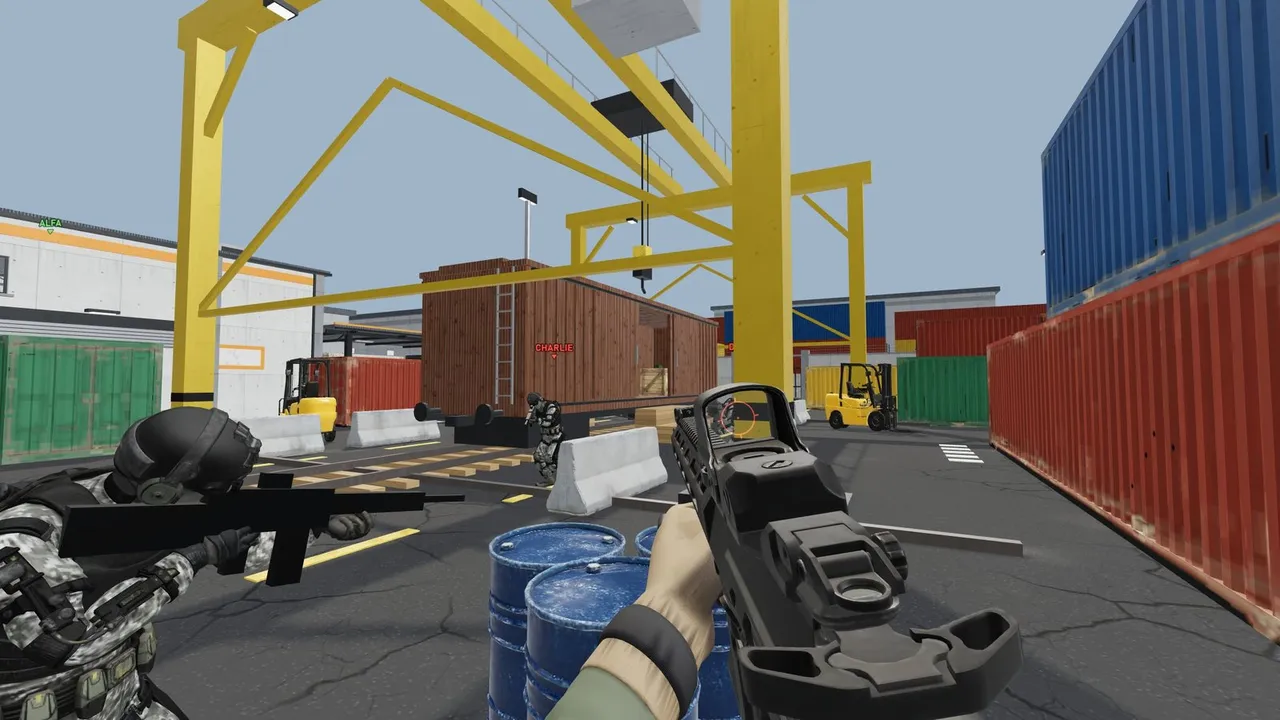
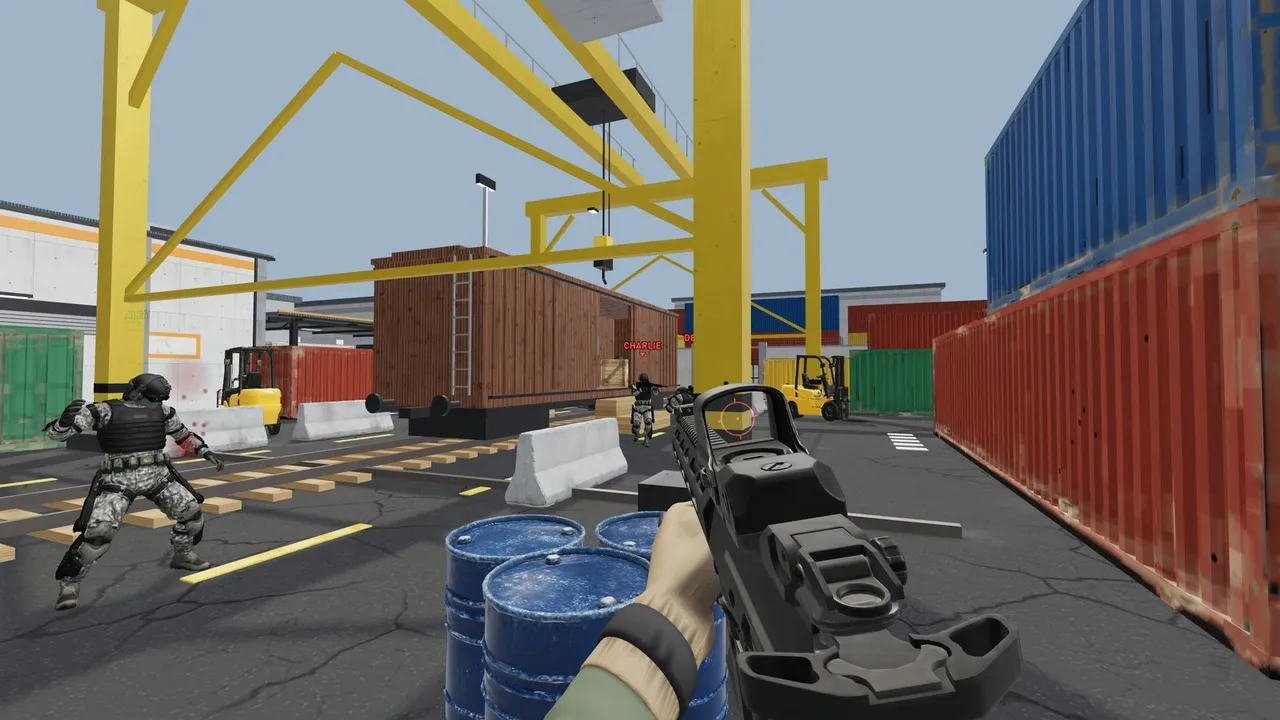
Claude of Duty vs Black Vector: two AI-built browser shooters, two different goals
Claude of Duty showed that AI agents can build a technically impressive FPS in three.js, and it inspired Black Vector. A fair side-by-side: procedural tech demo versus online multiplayer game.
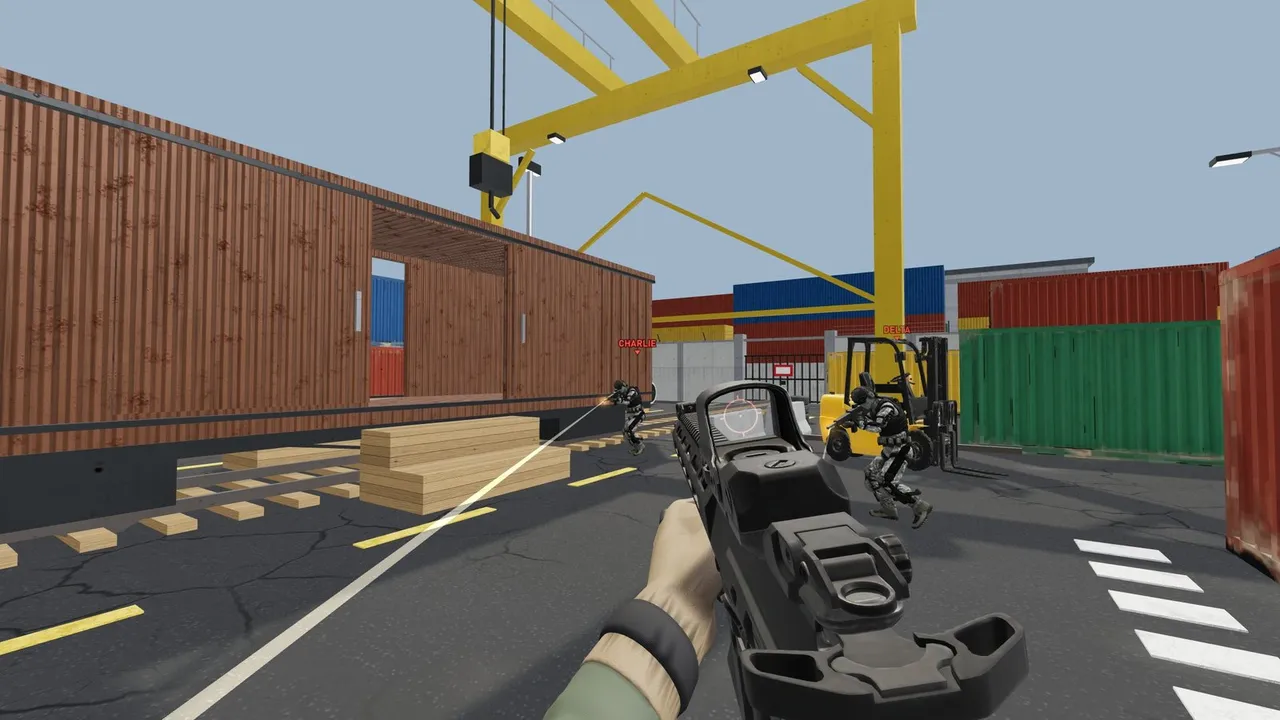
Real Black Vector gameplay.
In 2026 an open-source project called Claude of Duty, by Matt Shumer, made the rounds: a first-person shooter in three.js, written by a fleet of AI agents, with the stated goal of matching the look of a modern Call of Duty. It was one of the projects that convinced us a serious shooter in the browser was possible, and it is a direct inspiration for Black Vector.
The two games share a lot: browser, three.js, WebGL2, code written with AI. But they answer different questions. Here is a fair comparison, based on the public Claude of Duty repository and on our own game.
What Claude of Duty is
According to its README, Claude of Duty is roughly 55,000 lines of JavaScript across eleven subsystems (rendering, materials, sky, world, physics, player, weapons, effects, AI, interface and audio). Its most striking choice: there are no art assets at all. Every texture, mesh, animation and sound is generated by code when the game loads. The only runtime dependency is three.js, and the code is MIT-licensed.
It is also an experiment in AI-driven development. The repository includes a harness that takes reproducible screenshots, compares them pixel by pixel and profiles real gameplay, and it documents what worked: for example, that one agent owning a set of tightly coupled systems beat several agents working in parallel on separate folders.
The authors are refreshingly honest about the result. In their own words, the goal was to match a modern Call of Duty, and it does not: blind comparisons always picked the real game, and they list hands, close-up materials, characters and frame rate (about 28 to 30 fps at Retina resolution on a laptop) as the weak points.
What Black Vector is
Black Vector started from a different question: can a small studio ship an online shooter that people actually play, today, from a link? That pushed us toward different choices.
- Multiplayer first. Matches run on a dedicated server, with private lobbies, a public match list, bots to fill the teams and up to six human players per match.
- Real assets. Instead of generating everything from code, characters, weapons, animations and the map go through a classic 3D pipeline (Blender and Unreal Engine as offline tools), then get exported to glTF. The assets weigh under 50 MB and the browser caches them.
- A fair game. In an online shooter, the server has to be the referee. Black Vector's server checks movement, line of sight, fire rate and every hit, and it only tells each player about the enemies they can actually see or hear.
- Runs on ordinary PCs. Graphics quality settings keep it smooth on modest hardware, instead of chasing the maximum on a high-end laptop.
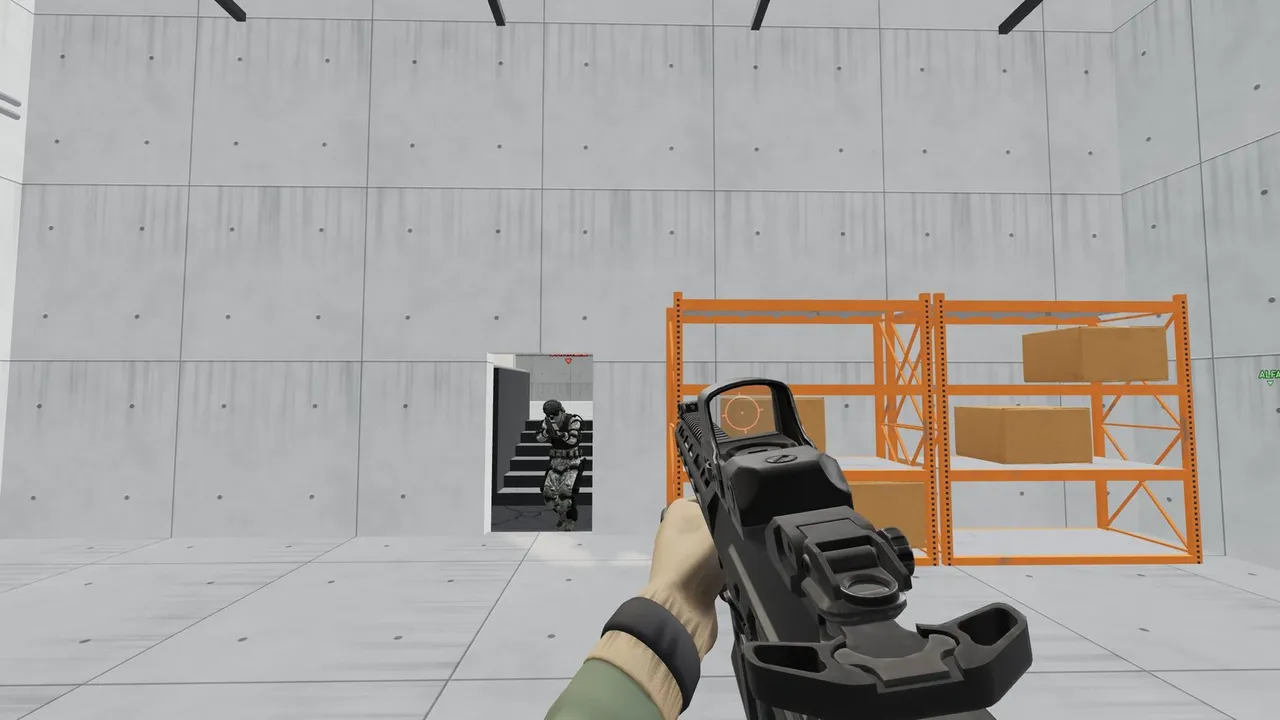
Side by side
| Claude of Duty | Black Vector | |
|---|---|---|
| Goal | Visual quality of a modern AAA shooter, as a tech demo | An online shooter you can play from a link, on any PC |
| Players | Single player against AI soldiers | Online team matches, private and public lobbies, bots |
| Art | 100% procedural: no models, textures or sound files | Real 3D models and animations through an asset pipeline |
| Rendering | Advanced pipeline: TAA, GTAO, volumetric fog, motion blur, procedural sky | Tuned for steady frame rate on modest hardware, with quality settings |
| Server | None needed | Dedicated server that referees every shot |
| Source code | Open source (MIT) | Not open source; a making-of guide and the source code (personal license, assets excluded) are available in our studio packages |
| Built with | A fleet of AI agents under orchestration | Claude Code, image generation for concept art, a human director |
What we learned from it
Claude of Duty proved two things that matter for everyone building games with AI. First, the ceiling is high: AI agents can write the kind of low-level rendering and physics code that used to need specialists. Second, measurement beats opinion. Its frame-time profiler found stalls that an average FPS number hid, and its pixel-diff gate let the team optimize without breaking the look. We test Black Vector the same way: automated tests run before every release, and we profile real matches rather than empty scenes.
Where we went another way is scope. A shooter becomes a game when other people are in it. So we spent our effort on networking, lobbies, the server referee and the feel of a match, and used real assets to get characters and weapons that read well at a distance, which is exactly where a procedural approach struggles today.
Which one is better?
They are not competing for the same thing. If you want to see how far procedural rendering in a browser can go, and read a candid account of building with many AI agents, Claude of Duty is a great repository to study. If you want to jump into a match with friends from a link, that is what Black Vector is for. We are grateful to the Claude of Duty project for showing the way.
Claude of Duty facts come from its public README on GitHub. Black Vector is not affiliated with Claude of Duty, Activision or Call of Duty.
Judge for yourself: Black Vector is free to play in your browser.
Play Black Vector