A new era for video games: shooters that run in the browser, built with Claude and three.js
No 100 GB download, no launcher, no install: open a link and play. Why browser games just became serious, what three.js and WebGL2 can do today, and how AI coding agents let a one-person studio build an online FPS.
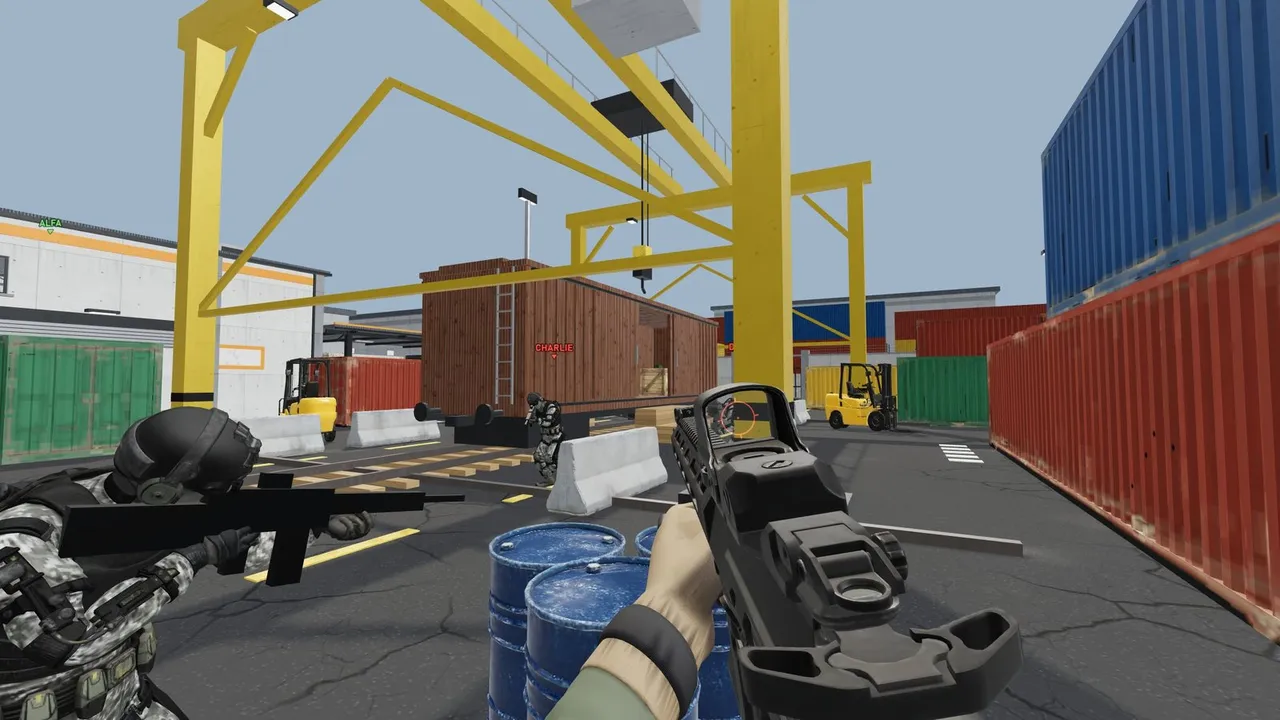
Real Black Vector gameplay.
For twenty years the deal has been the same: if you want to play a modern shooter, you buy it, download 100 GB or more, wait for the patch, keep a launcher running and hope your PC is recent enough. Browser games were the other world, small, casual, made to kill five minutes.
That line is starting to blur. A real-time 3D shooter with dynamic lights, animated characters and online matches now fits in a browser tab. And thanks to AI coding agents, it no longer takes a studio of hundreds of people to build one. We think this is the start of a new era, and Black Vector, our tactical FPS in alpha, is our bet on it.
Why the browser, why now
Three things changed at the same time.
- The graphics stack grew up. WebGL2 is available in every modern browser and gives games real GPU access: shaders, shadow maps, instancing, post-processing. WebGPU is arriving on top of it.
- three.js matured. The open-source library handles scenes, materials, animations and loading 3D models in standard formats like glTF. It lets a small team focus on the game instead of the engine.
- Building got cheaper. AI agents like Claude can now write, test and debug large codebases. The hard part of a browser shooter (networking, physics, animation blending, user interface) is exactly the kind of work they speed up.
The result for the player is simple: a link instead of an installer. Black Vector loads in the browser on any reasonably recent PC. Its 3D assets weigh under 50 MB, and the browser caches them, so the second visit is almost instant. There is nothing to install, nothing to update by hand, and nothing to uninstall.
How a one-person studio builds an online FPS
LiveWeights Production is an independent developer. Black Vector is not the product of a large team or a large budget: it is the product of a new way of working, where one person directs and several AI tools do a large share of the execution.
Claude writes and reviews the code
The game client (three.js, plain JavaScript modules, no build step) and the game server (Node.js with WebSockets) are written with Claude Code. That covers the movement controller, weapons and ballistics, the bots, the networking, the server referee that checks every shot, the lobbies for private and public matches, the HUD and minimap, and the test suite that runs before every release. The human job is to decide what the game should feel like, play it, and say what is wrong.
Images and concept art come from image models
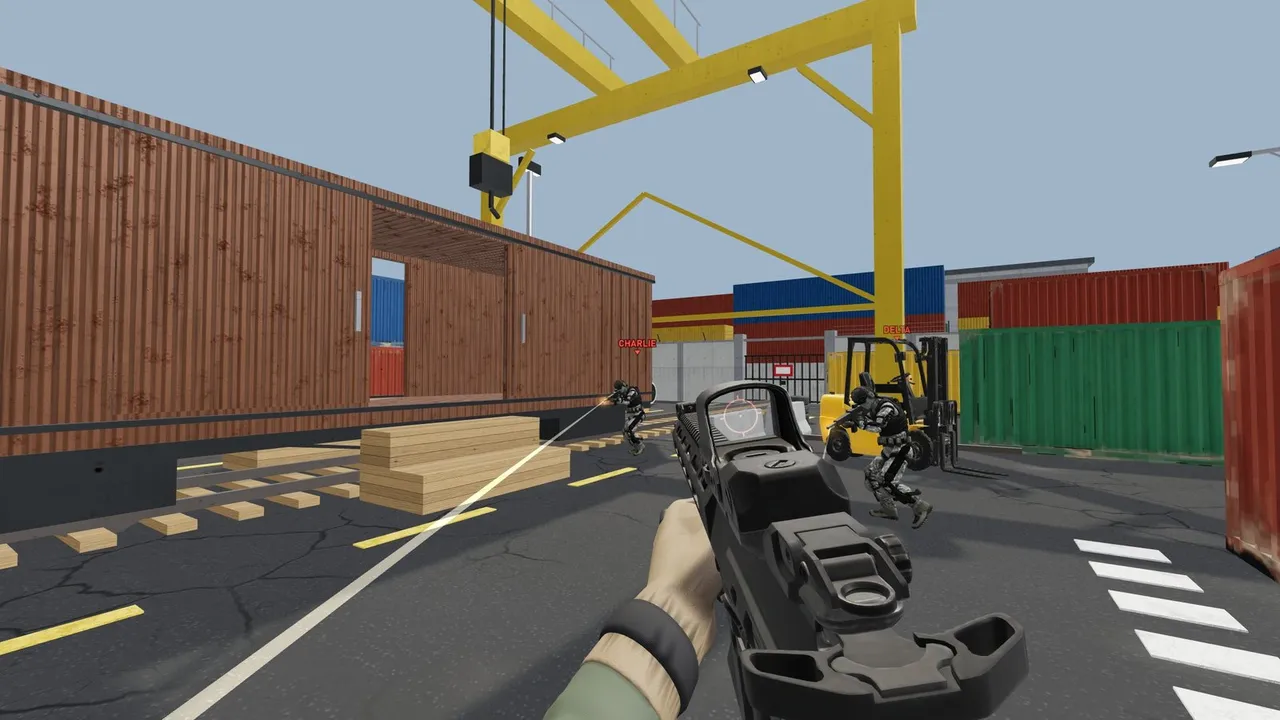
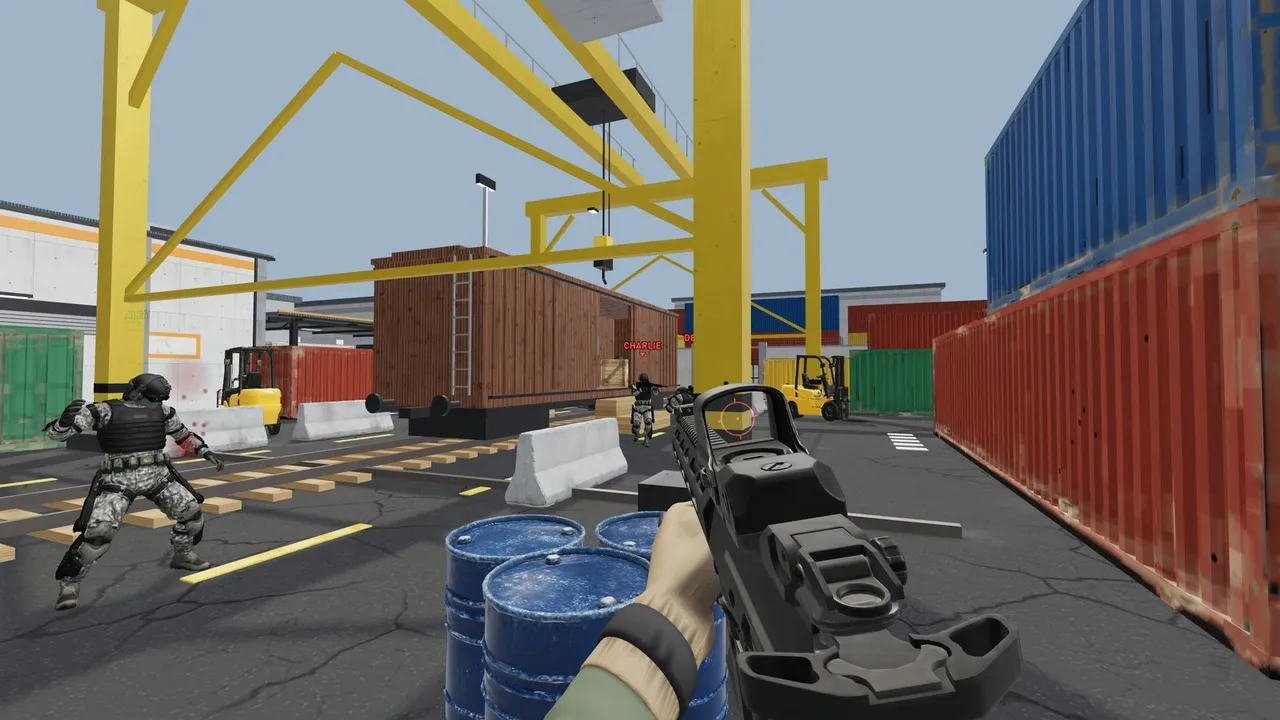
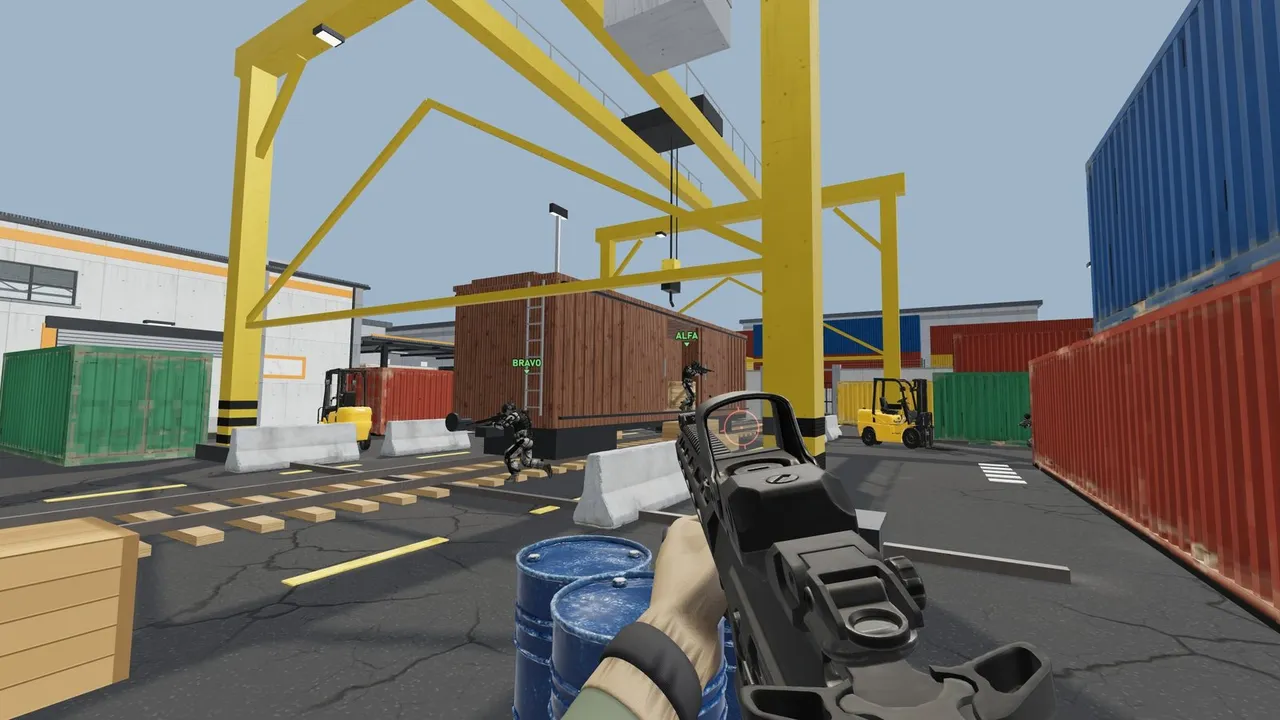
Concept art, key art and website illustrations are made with image generation (Grok). We label them as concept art on our pages: the screenshots you see in this article are real gameplay.
3D content goes through a classic pipeline
Characters, weapons, animations and the Freight Yard map go through Blender and Unreal Engine as offline tools, then get exported to glTF for the browser. AI agents automate a lot of that conversion work too, but the assets themselves are real models and animations, not placeholders.
What a browser FPS can already do
Black Vector is in alpha, and it is only the beginning, but today it already has:
- team matches online on a dedicated server, up to six human players per match plus bots;
- private matches with a code you send to friends, and a public list of matches to join or host;
- a large rail freight yard with cranes, containers and a warehouse with interiors;
- grenades, healing syringes and killstreaks like the UAV and the spy plane;
- a server that referees every shot, so cheating from the browser console does not work (we explain how in this article);
- graphics quality settings, so it stays smooth on modest PCs too.
The honest limits
Browser games are not magic. A browser tab gets less raw power than a native game: you cannot stream 100 GB of textures, and some effects that big engines do (fully dynamic global illumination, film-quality characters up close) are still out of reach or too expensive for most PCs. Performance also depends on the browser and the graphics drivers.
We think that is the right trade for a lot of players. Fast to start, light, playable on the office laptop or the old gaming PC, shareable with a link. The goal of Black Vector is to push that trade as far as it goes: AAA-style action, with the convenience of a web page.
Built with the players
The other thing the browser changes is the relationship with players. Updates go live for everyone at once, so the game can move fast. On the Improvements page players propose new features, we assess cost and delivery time, and whoever wants a feature first can fund it. When the goal is reached, we build it by the promised deadline.
Try it yourself: Black Vector is free to play in your browser, no download.
Play Black Vector