How we keep cheaters out of a browser FPS
In a browser game every player can open the developer tools. How Black Vector's server referees every shot, hides enemies you cannot see and keeps the game fair without installing anything on your PC.
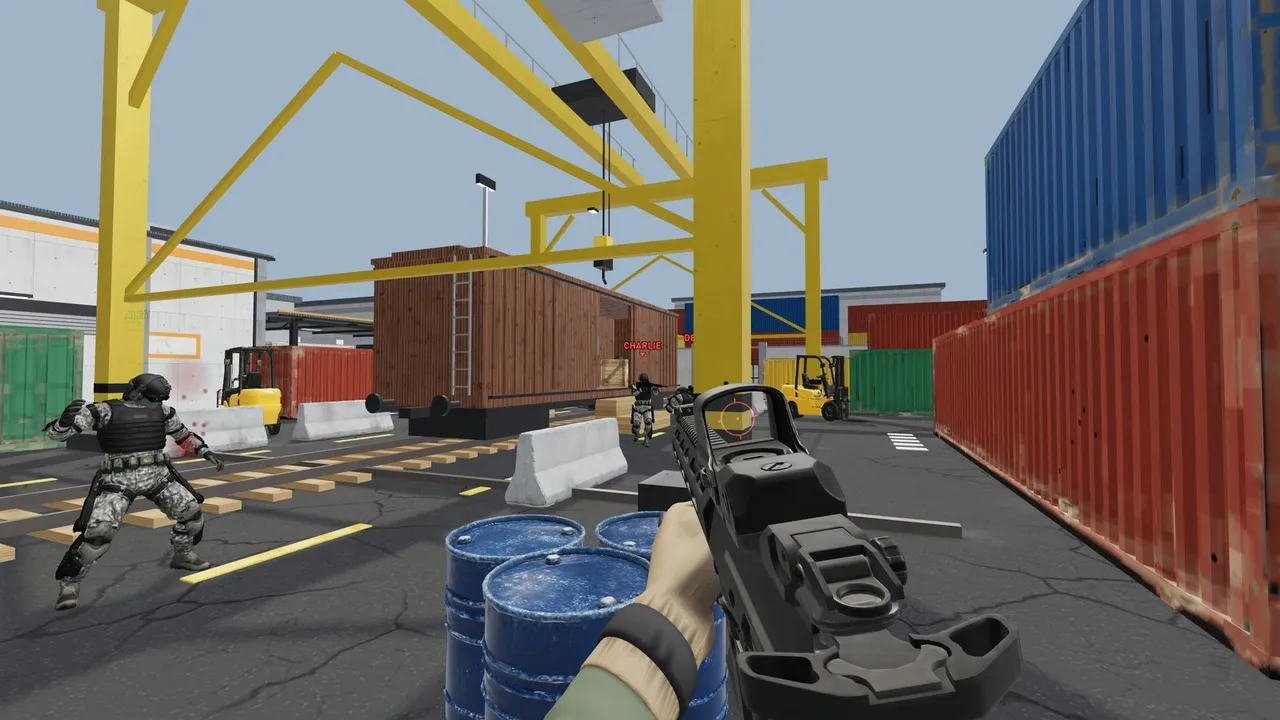
Real Black Vector gameplay.
Every online shooter has to deal with cheaters. A browser shooter has it harder: the whole game runs as JavaScript in a page, and anyone can open the developer tools, read the code, change variables and send their own messages to the server. There is no kernel-level anti-cheat to install, and we would not want one.
So Black Vector follows one rule: the client is never trusted. Your browser draws the game and sends what you do; the server decides what actually happened. Here is how that works, in plain terms.
Responsive for you, refereed by the server
If every movement had to wait for the server, the game would feel sluggish. So your browser moves your character immediately and computes where your shot goes, which is why aiming feels instant. But each of those messages is checked on the server before it counts.
Movement
The server knows how fast each character can move, where the walls are and where the map ends. A player who moves too fast, walks through a wall or leaves the map is put back where they should be. Respawn points are chosen by the server too, so nobody can choose to reappear behind the enemy team.
Every shot
A hit only counts if it makes sense. The server checks that:
- the shot starts from the player's eyes and goes where their view is pointing;
- the target is in range and there is no wall in between;
- the weapon could actually fire that fast and still has ammo;
- the bullet path really crosses the body that was hit.
Damage is decided by the server from the weapon's stats, not by the number the browser sends. Editing the game's code to make your rifle deal a million damage changes nothing for anyone else.
Suspicious aim
Some cheats do not break any single rule: they just aim too well. The server watches patterns over many shots, like hit rates and headshot ratios that no human sustains, or shots fired where the player is not looking. Players who match those patterns are kicked out of matches for a while, and the events are logged so we can review them.
You cannot see what the server does not send
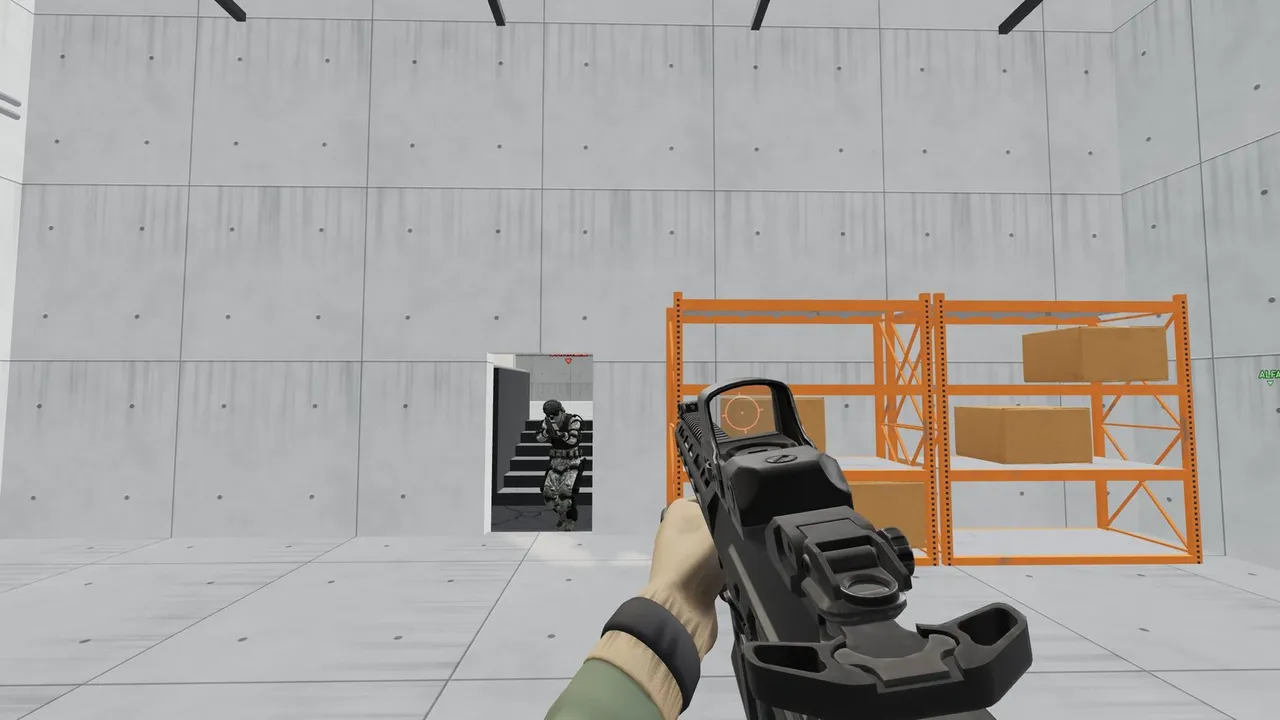
The classic cheat in shooters is the "wallhack": drawing enemies through walls. It works because many games send every player the position of everyone, all the time.
Black Vector does not. The server sends each player the position of an enemy only when there is a reason to know it: someone on their team can see that enemy, they can hear them (unsuppressed shots, running footsteps nearby), a UAV or spy plane is revealing them, or they just traded hits. Everyone else is simply not in the data your browser receives. A wallhack has nothing to draw.
The same idea applies to the minimap: a UAV sweep sends only the dots on the map at that moment, not a live feed of positions.
What this cannot stop
No anti-cheat is perfect, and we would rather be honest about it. An aim bot that moves the view in a convincingly human way can only be spotted from its results over time. That is why the pattern checks exist, why we keep logs of what the referee rejects, and why we tune the rules as we see real matches.
Why no install matters
Many big games fight cheaters with drivers that run with deep access to your operating system. That is a lot to ask for a free game you opened from a link, and it is impossible in a browser anyway. Doing the work on the server keeps Black Vector what it is supposed to be: open a page, play a fair match, close the tab.
See it in action: jump into a match in your browser.
Play Black Vector